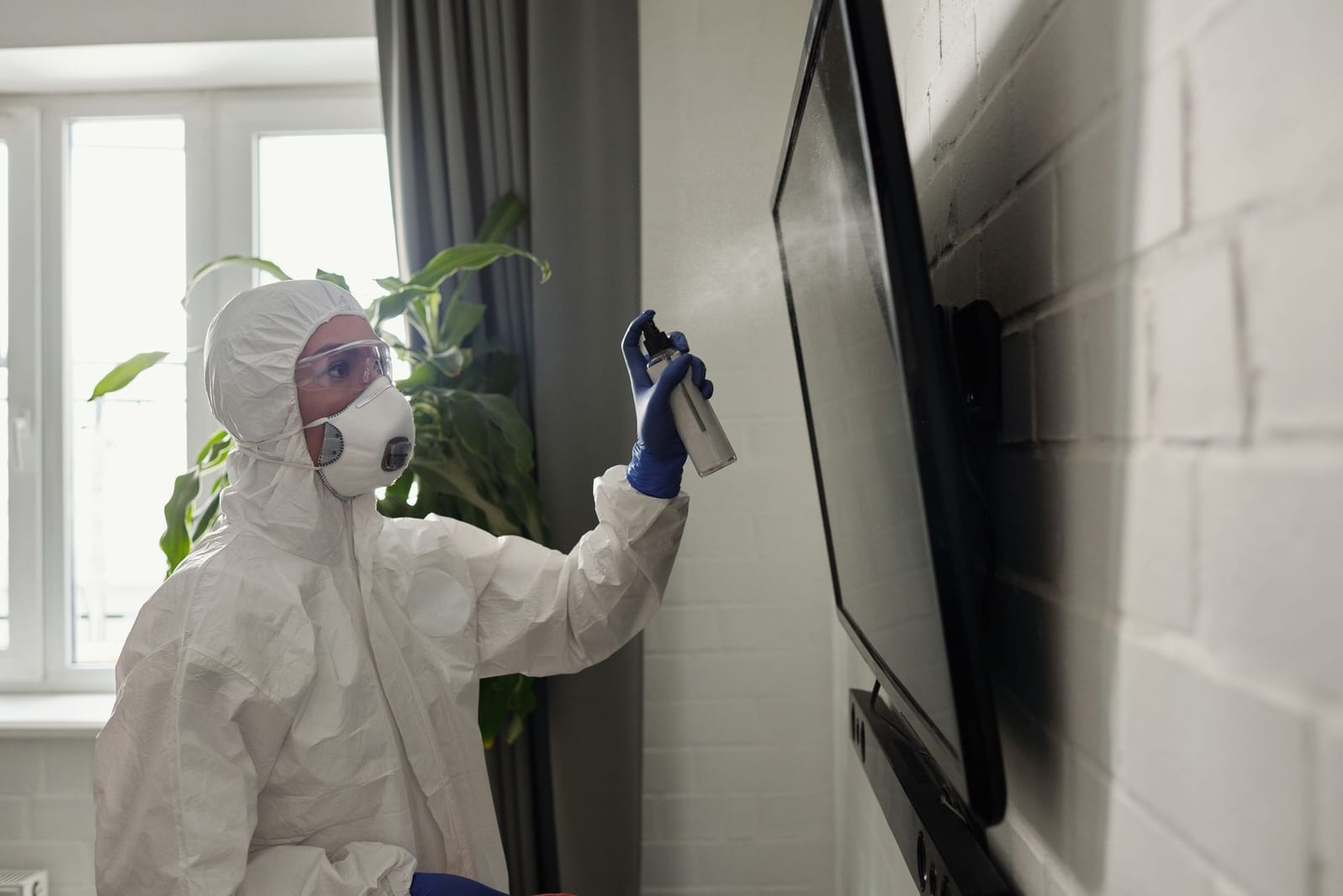
Mold testing in Manhattan: what to know
Manhattan is the densest borough in the country, and its housing stock runs from the early-1900s tenements of the Lower East Side, East Village and Chinatown to grand pre-war apartment buildings and co-ops on the Upper East and Upper West Sides. Thin walls, shared stairwells, original plumbing risers and deep baseboard gaps give German cockroaches and mice constant routes between the island's tightly packed units.
Travel density makes Manhattan a bed bug hotspot: hotels, short-term rentals, frequent sublets and a steady stream of international visitors mean even spotless luxury co-ops face introductions through luggage and second-hand furniture, not poor hygiene. In multi-unit buildings a single untreated apartment rarely ends the problem, because bed bugs move along shared walls and risers.
The borough's restaurant and transit density — Times Square, Penn Station, Midtown food corridors and the subway beneath them — sustains one of the city's largest rat populations, feeding rodent pressure out into adjacent residential blocks, while green edges along Central Park, Riverside Park and the Hudson add seasonal ant and occasional-invader pressure to lower-floor and garden apartments.
How much does mold testing cost in Manhattan?
$10–$25
Per sqft (national); national average ~$15–18/sqft. Complex projects (hidden mold, wall-cavity access, HVAC) run $15–$30/sqft.
| Under 10 sqft | $500–$1,500 total job |
| 100 sqft | $1,000–$2,500 total job |
| Whole-house / major | $10,000–$30,000 total job |
| Typical project total | $1,200–$3,750 total job, national avg ~$2,300–$2,400 |
US national figure — NYC typically runs higher.
NYC pest-control pricing tends to run higher in Manhattan than in Brooklyn or Queens — tier-2 NYC industry sources cite roughly a 10–20% premium, attributed to building-access logistics (walk-ups, elevators, doorman/board approval) and labour costs. This is directional signal from industry blogs, not an independently verified figure — confirm with a quote for your specific building.
Market range — not our quote
This is a market range synthesised from published cost guides — not a quote from this provider. The actual price depends on an in-person or photo-based inspection.
US NATIONAL — NYC typically higher.
What drives the price
- Square footage of affected area
- Mold type and whether it's hidden (wall cavities, HVAC)
- Complexity (containment, air scrubbing, HVAC cleaning)
- Cause (recurring leak vs. one-time water event)
Signs you need mold testing
- A musty odor is present with no visible mold growth found during a visual inspection
- Occupants report allergy-like or respiratory symptoms and want mold ruled in or out as a documented factor
- Remediation work was just completed and you need clearance testing to confirm it worked before reoccupying the space
- A buyer, tenant, or board requires lab-documented test results, not just a visual assessment
- Visible growth was found and you need it identified by type before planning remediation
How we treat mold testing in Manhattan
Mold testing is a sampling and lab-analysis process, not a visual assessment (that's mold inspection, a separate service). The two most common sampling methods are air sampling — collecting a measured volume of air onto a spore trap to identify and compare spore types and general levels indoors versus outdoors — and surface or tape sampling, which lifts a sample directly from a suspected growth area to identify what it actually is. Samples are sent to an independent, accredited lab for analysis; we don't self-analyse the results, since that independence matters for the report's credibility.
Testing is used in a few specific situations: when there's a musty odor but no visible growth and you want to know if mold is present somewhere unseen; when occupants have health concerns and want the presence (or absence) of mold documented; when growth needs to be identified by type for remediation planning; and critically, for clearance testing after remediation is complete, to confirm the work brought spore levels back down to a normal range compared to outdoor air rather than just visually removing what was seen.
Local landmarks & coverage
We serve all of Manhattan and the surrounding Manhattan area — including Central Park, Times Square, Empire State Building, Wall Street, Grand Central Terminal, the High Line — across ZIP codes 10001, 10002, 10009, 10011, 10014, 10016, 10019, 10025, 10027, 10128.