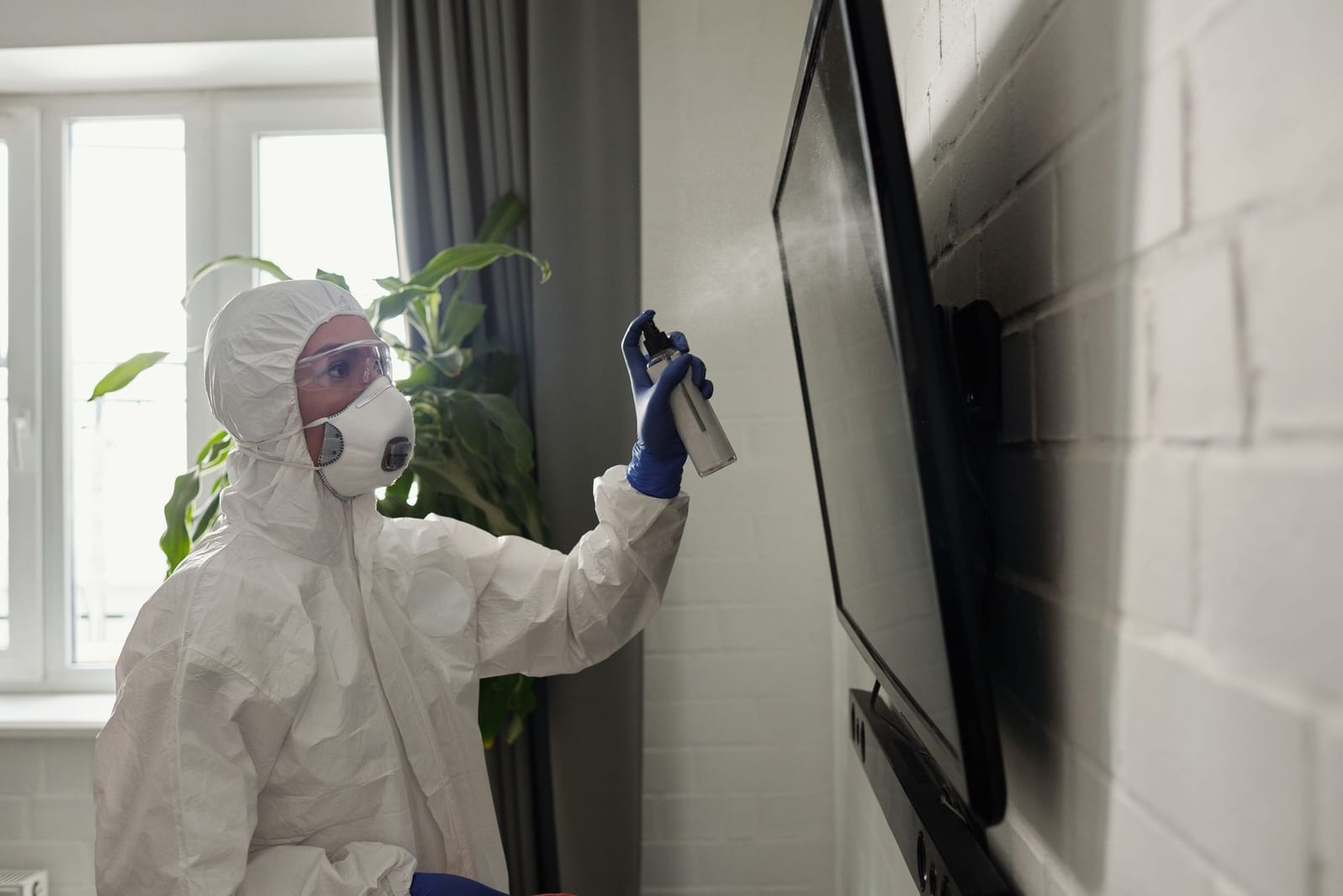
Mold testing is a sampling and lab-analysis process, not a visual assessment (that's mold inspection, a separate service). The two most common sampling methods are air sampling — collecting a measured volume of air onto a spore trap to identify and compare spore types and general levels indoors versus outdoors — and surface or tape sampling, which lifts a sample directly from a suspected growth area to identify what it actually is. Samples are sent to an independent, accredited lab for analysis; we don't self-analyse the results, since that independence matters for the report's credibility.
Testing is used in a few specific situations: when there's a musty odor but no visible growth and you want to know if mold is present somewhere unseen; when occupants have health concerns and want the presence (or absence) of mold documented; when growth needs to be identified by type for remediation planning; and critically, for clearance testing after remediation is complete, to confirm the work brought spore levels back down to a normal range compared to outdoor air rather than just visually removing what was seen.
We're deliberately cautious about numbers here: air and surface sample results are compared against outdoor air and normal background levels rather than against a single universal 'safe' spore count, because there isn't one federally mandated numeric threshold that applies to every mold type and every property — the lab report and a qualified assessor's interpretation of it is what actually answers the question, not a single number pulled out of context.
How much does mold testing cost in NYC?
$10–$25
Per sqft (national); national average ~$15–18/sqft. Complex projects (hidden mold, wall-cavity access, HVAC) run $15–$30/sqft.
| Under 10 sqft | $500–$1,500 total job |
| 100 sqft | $1,000–$2,500 total job |
| Whole-house / major | $10,000–$30,000 total job |
| Typical project total | $1,200–$3,750 total job, national avg ~$2,300–$2,400 |
US national figure — NYC typically runs higher.
Market range — not our quote
This is a market range synthesised from published cost guides — not a quote from this provider. The actual price depends on an in-person or photo-based inspection.
US NATIONAL — NYC typically higher.
What drives the price
- Square footage of affected area
- Mold type and whether it's hidden (wall cavities, HVAC)
- Complexity (containment, air scrubbing, HVAC cleaning)
- Cause (recurring leak vs. one-time water event)
Signs you have a mold testing problem
- A musty odor is present with no visible mold growth found during a visual inspection
- Occupants report allergy-like or respiratory symptoms and want mold ruled in or out as a documented factor
- Remediation work was just completed and you need clearance testing to confirm it worked before reoccupying the space
- A buyer, tenant, or board requires lab-documented test results, not just a visual assessment
- Visible growth was found and you need it identified by type before planning remediation
Why Manhattan sees this
New York State licenses mold assessors and remediators separately (Labor Law Article 32) for covered projects, which as a matter of process keeps mold testing and mold remediation as distinct, independently accountable steps rather than the same contractor testing and then remediating their own finding — we work within that separation.
Clearance testing after remediation is a common requirement in NYC co-op and condo buildings before a unit is reoccupied or work is signed off by a board, and we scope clearance sampling specifically to confirm post-remediation results rather than repeating a general inspection.
Because NYC apartments often share walls, floors and ventilation with neighbouring units, air sampling sometimes needs to account for a shared-building context — we factor that into where samples are taken and how results are interpreted.